Search Intent SEO: How to Match Content to User Intent in 2026
Introduction
SEO in 2026 is no longer about keywords alone. Search engines powered by AI — especially systems used by Google and conversational tools like ChatGPT — focus heavily on search intent.
If your content doesn't match what the user actually wants, you won't rank — even with perfect keywords and backlinks.
This guide explains how search intent works, how AI interprets it, and how to optimize your content to match it perfectly.
1️⃣ What Is Search Intent?
Search intent refers to the goal behind a user's query.
Instead of asking:
"What keyword should I target?"
Modern SEO asks:
"What problem is the user trying to solve?"
AI systems classify queries automatically and prioritize pages that best satisfy the intent, not just match the phrase.
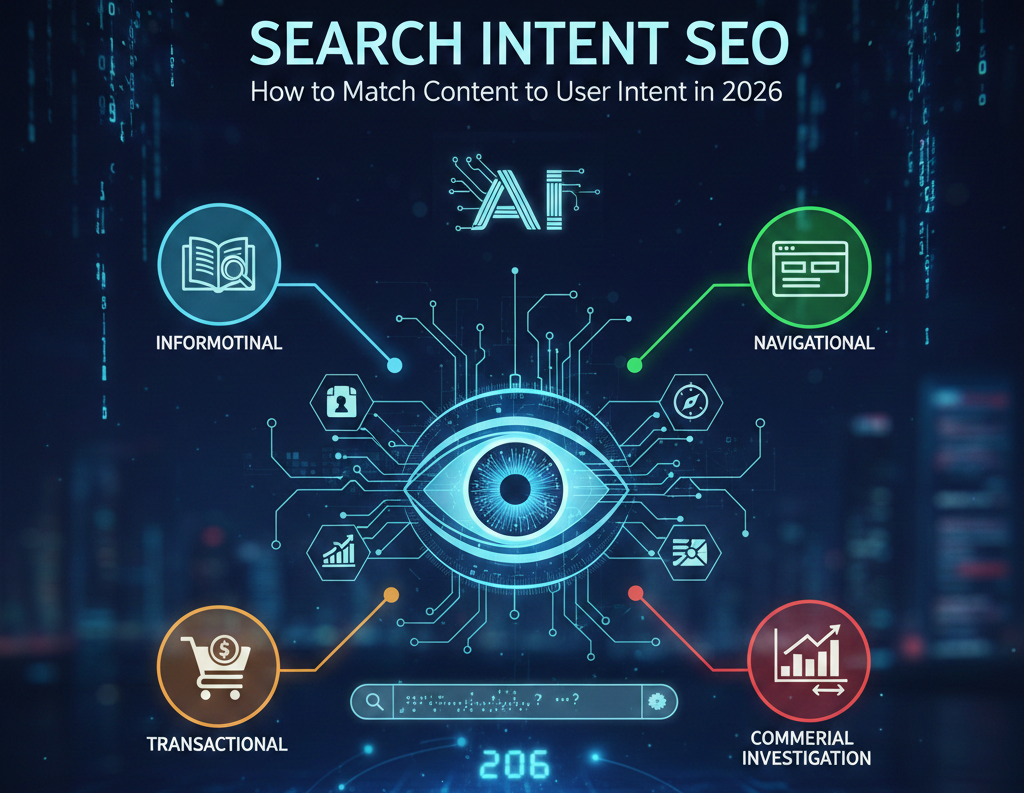
2️⃣ The 4 Types of Search Intent
🔎 Informational Intent
User wants to learn something.
Examples:
- What is SEO?
- How does AI search work?
- Tips for ranking on Google
Best content format:
- Guides
- Tutorials
- Definitions
- Pillar blog posts
🧭 Navigational Intent
User wants a specific website or brand.
Examples:
- Ahrefs login
- Rank Math plugin
- Google Search Console
Best format:
- Brand pages
- Landing pages
- Homepages
💰 Transactional Intent
User wants to buy or sign up.
Examples:
- Best SEO tools pricing
- Buy hosting for WordPress
- SEO agency near me
Best format:
- Product comparisons
- Sales pages
- Pricing tables
- Reviews
📊 Commercial Investigation
User is comparing options before buying.
Examples:
- Best SEO tools 2026
- SurferSEO vs Clearscope
- Rank Math vs Yoast
Best format:
- Comparison posts
- Listicles
- Case studies
3️⃣ Why Search Intent Matters More in 2026
AI search engines now:
- Understand context beyond keywords
- Evaluate content usefulness
- Detect mismatch between query and page
- Prioritize pages that solve the user's problem fastest
Even if you rank initially, intent mismatch causes quick ranking drops.
💡 Related: Learn more about how AI understands content in our guide on Semantic SEO in 2026
4️⃣ How to Identify Search Intent
✅ Step 1: Analyze the SERP
Search your keyword and observe:
- Are results guides or product pages?
- Are there AI summaries?
- Do results show listicles or tutorials?
Google already shows you the intent pattern.
✅ Step 2: Check Content Format
If top results are:
- Guides → informational intent
- Reviews → commercial intent
- Product pages → transactional intent
Match the format exactly.
✅ Step 3: Look at SERP Features
Features reveal intent:
- Featured snippets → informational
- Shopping results → transactional
- Maps → local intent
- AI Overviews → educational intent
5️⃣ How to Optimize Content for Search Intent
🧠 Match the Primary Intent First
Don't mix sales content with educational intent.
Example:
Keyword: "What is SEO"
❌ Wrong page: agency sales page
✅ Correct page: educational guide
🧠 Add Secondary Intent Sections
Great content satisfies multiple intents.
Example for informational article:
- Definition
- How it works
- Tools list
- Beginner tips
- Next steps
This increases dwell time and relevance.
🧠 Use Intent-Based Structure
Example layout:
- Quick definition
- Expanded explanation
- Step-by-step guide
- Tools/resources
- FAQ
- Conclusion with action step
This structure satisfies AI extraction and human readers.
6️⃣ Search Intent Optimization for AI Overviews
AI-generated summaries pull from:
- Clear definitions
- Short answer blocks
- Well-structured headings
- Strong topical relevance
To appear in AI answers:
- Provide a 40–60 word definition early
- Add FAQ sections
- Use structured lists
- Avoid vague introductions
💡 Related: Discover more AI optimization strategies in SEO in 2026 and Beyond: AIO, AI Search, and the Future
7️⃣ Common Search Intent Mistakes
❌ Writing sales content for informational keywords
❌ Ignoring SERP format patterns
❌ Targeting too many intents in one post
❌ Creating shallow content without depth
❌ Over-optimizing keywords instead of usefulness
8️⃣ Tools to Analyze Search Intent
- Google SERP itself → best free method
- Ahrefs / SEMrush → keyword intent labels
- SurferSEO → SERP structure analysis
- Frase.io → question & intent mapping
- ChatGPT → cluster user intent ideas
🔥 Key Takeaways
- ✅ Search intent is now the #1 ranking factor in AI-driven search.
- ✅ Matching intent matters more than keywords.
- ✅ Analyze SERP patterns before writing.
- ✅ Structure content to satisfy both primary and secondary intent.
- ✅ Intent-aligned content wins AI citations and rankings.
Conclusion
SEO in 2026 is about solving problems, not targeting phrases. Search engines and AI platforms reward content that perfectly aligns with user intent.
If you understand intent deeply, your content will:
- Rank faster
- Stay stable longer
- Gain AI visibility
- Convert better
Master search intent, and you master modern SEO.